The Ultimate Camping Radio Communication Guide
When your GPS is searching for location, when you your cell phone no longer has signal you can stay connected when the signal fades — an enthusiast’s guide to FRS, GMRS, ham radios, and NOAA weather alerts, with easy channel↔frequency charts. This guide will teach you in a few short minutes how to understand these radios and keep you connected.
Why radios still matter off-grid
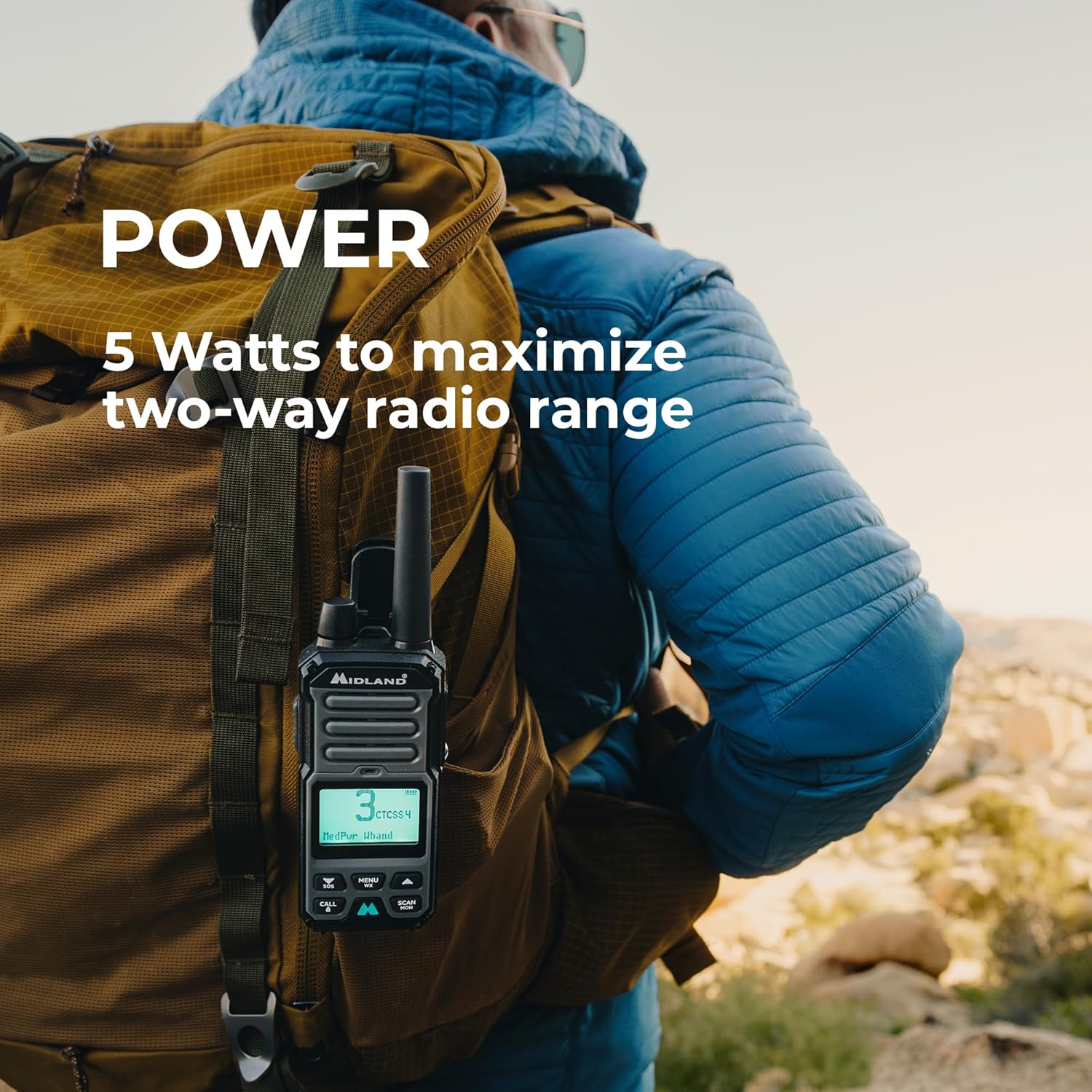
Out in the wilderness, silence is peaceful—until it isn’t. When wind rises over the ridge and the pines begin to hiss, cell bars disappear and the map app stalls. Radios keep working. They’re simple, battery powered, and independent of towers, making them one of the most reliable pieces of camping gear you can carry. Whether you’re coordinating a hike, keeping track of kids around camp, or preparing for storms, a well-chosen handheld can reach places your phone won’t.
FRS: Family Radio Service
FRS is the friendliest entry point: license-free, channel-based, and easy to use. Most handhelds show channels 1–22 without exposing the underlying frequency. Power is limited (up to 2 watts), which keeps range modest but practical for campsite coordination, short hikes, and quick check-ins. If your radio only displays “CH 1–22,” it’s almost certainly FRS. That simplicity is why models from brands like Motorola, Cobra, and Midland are so popular for families.
GMRS: General Mobile Radio Service
GMRS radios look similar to FRS but bring more capability: higher power (up to 50 watts on some units), detachable antennas on certain models, and access to repeater channels. GMRS shares the same 22 core frequencies with FRS, but many GMRS radios also display the actual MHz values and add repeater options. You do need an FCC license (no test; a single license covers your household for ten years). If you camp across larger areas, travel by 4×4, or want a range upgrade, GMRS is the sweet spot.
FRS ↔ GMRS channel matching chart
Why this matters: many campers use FRS radios that show only channels, while others carry GMRS radios that show frequencies. The chart below matches each FRS channel to its exact GMRS frequency for direct, radio-to-radio (simplex) communication.
| Channel | Frequency (MHz) | Description |
|---|---|---|
| 1 | 462.5625 | FRS/GMRS shared (simplex) |
| 2 | 462.5875 | FRS/GMRS shared |
| 3 | 462.6125 | FRS/GMRS shared |
| 4 | 462.6375 | FRS/GMRS shared |
| 5 | 462.6625 | FRS/GMRS shared |
| 6 | 462.6875 | FRS/GMRS shared |
| 7 | 462.7125 | FRS/GMRS shared |
| 8 | 467.5625 | FRS/GMRS shared |
| 9 | 467.5875 | FRS/GMRS shared |
| 10 | 467.6125 | FRS/GMRS shared |
| 11 | 467.6375 | FRS/GMRS shared |
| 12 | 467.6625 | FRS/GMRS shared |
| 13 | 467.6875 | FRS/GMRS shared |
| 14 | 467.7125 | FRS/GMRS shared |
| 15 | 462.5500 | FRS/GMRS shared (also GMRS main) |
| 16 | 462.5750 | FRS/GMRS shared |
| 17 | 462.6000 | FRS/GMRS shared |
| 18 | 462.6250 | FRS/GMRS shared |
| 19 | 462.6500 | FRS/GMRS shared |
| 20 | 462.6750 | FRS/GMRS shared |
| 21 | 462.7000 | FRS/GMRS shared |
| 22 | 462.7250 | FRS/GMRS shared |
Quick use: If a friend’s FRS radio is on Channel 6, set your GMRS to 462.6875 MHz (simplex, no repeater) and you’ll talk directly.
GMRS repeater channels
Many GMRS handhelds add repeater channels labeled 15R–22R (or RP15–RP22). These use the same output frequencies as Channels 15–22 but transmit on an input frequency that is +5 MHz. A properly programmed repeater can extend your range for many miles. FRS radios can’t access repeaters, but they can still hear repeater output.
| Repeater Ch | Output (Listen) | Input (Transmit) | Offset | Notes |
|---|---|---|---|---|
| 15R / RP15 | 462.5500 | 467.5500 | +5.000 MHz | Same output as CH 15 |
| 16R / RP16 | 462.5750 | 467.5750 | +5.000 MHz | Same output as CH 16 |
| 17R / RP17 | 462.6000 | 467.6000 | +5.000 MHz | Same output as CH 17 |
| 18R / RP18 | 462.6250 | 467.6250 | +5.000 MHz | Same output as CH 18 |
| 19R / RP19 | 462.6500 | 467.6500 | +5.000 MHz | Same output as CH 19 |
| 20R / RP20 | 462.6750 | 467.6750 | +5.000 MHz | Same output as CH 20 |
| 21R / RP21 | 462.7000 | 467.7000 | +5.000 MHz | Same output as CH 21 |
| 22R / RP22 | 462.7250 | 467.7250 | +5.000 MHz | Same output as CH 22 |
Note: If you can hear a repeater but can’t get back in, check your tone settings (CTCSS/DCS) and verify the +5 MHz offset and direction.
Ham radios for campers
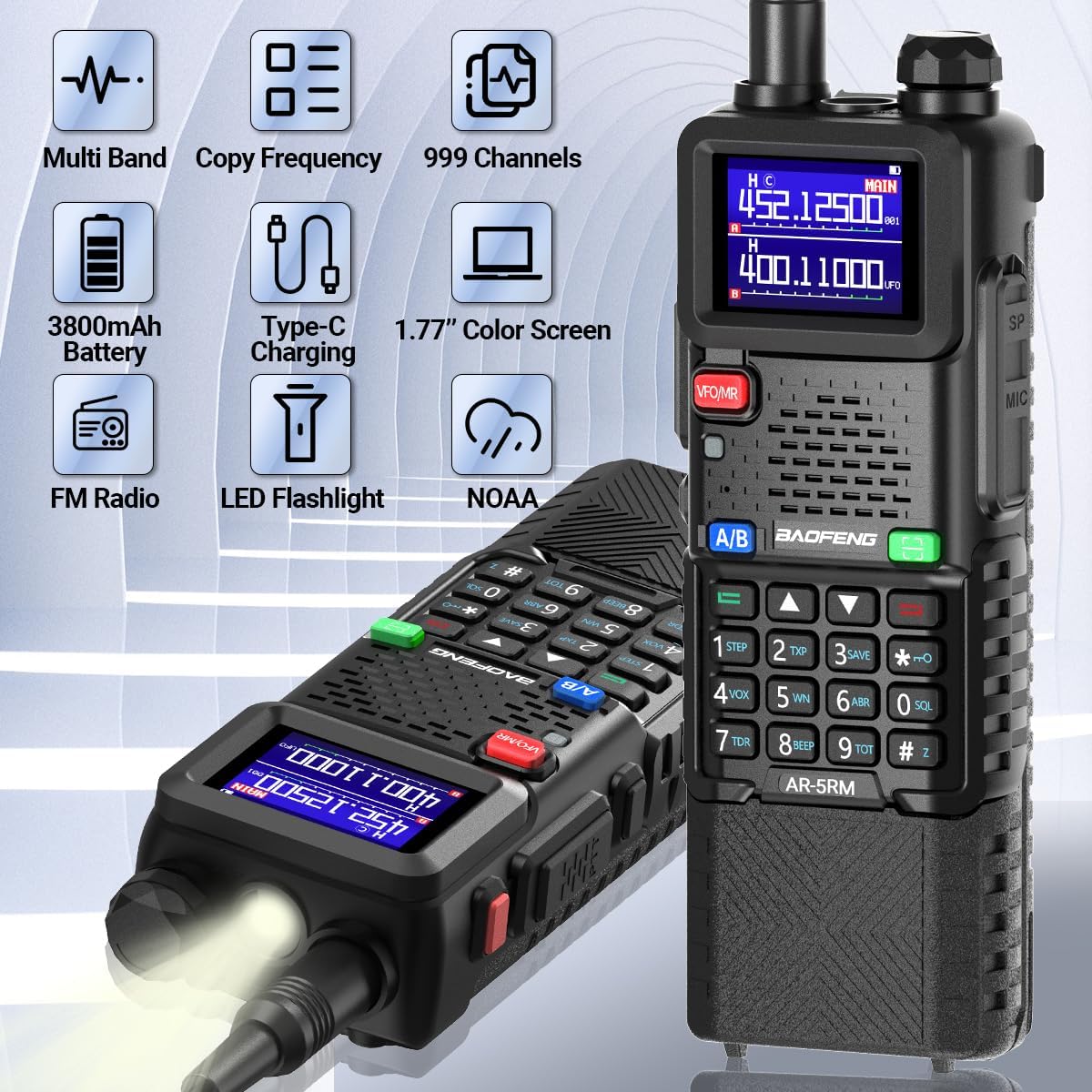
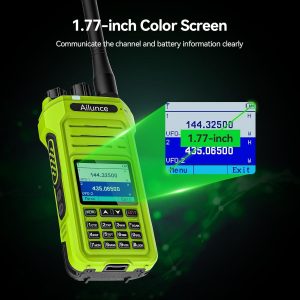
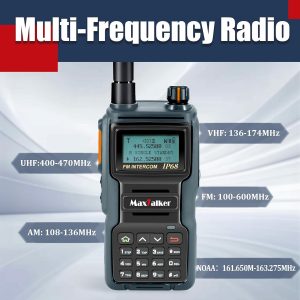
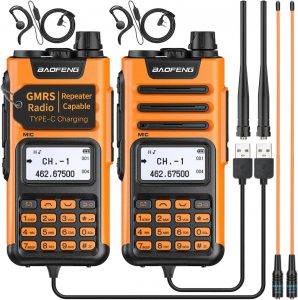
Ham (amateur) radios open a much bigger world of communication. With a simple license and a bit of practice, you can reach across valleys and link into emergency networks. Many campers favor compact handhelds like the Baofeng UV-5R because they’re affordable and flexible. Keep in mind that transmitting on amateur bands requires a license, and transmitting on services like GMRS has its own rules—know your radio and the regulations where you camp.
NOAA weather radio channels
Weather moves quickly in the backcountry. The NOAA Weather Radio network broadcasts 24/7 forecasts and warnings, and most camping handhelds from brands like Midland include a dedicated WX button that auto-scans for the strongest station. Even when your phone shows “No Service,” NOAA broadcasts keep you informed about storms, lightning, and wildfire conditions.
| NOAA Channel | Frequency (MHz) | Typical Use |
|---|---|---|
| WX1 | 162.550 | National and regional forecasts |
| WX2 | 162.400 | Local forecasts |
| WX3 | 162.475 | General weather |
| WX4 | 162.425 | Backup station |
| WX5 | 162.450 | Alternate local station |
| WX6 | 162.500 | Regional weather |
| WX7 | 162.525 | Emergency alerts and warnings |
Recommended radios for campers
Baofeng UV-5R (ham/monitoring): A camper favorite for its value and flexibility. Dual-band monitoring, swappable batteries, and a huge accessory ecosystem. Use responsibly and within licensing rules.
Midland GXT1000VP4 (GMRS): A proven handheld with strong range in open terrain, built-in NOAA weather alert, and easy channel selection for mixed FRS/GMRS groups.
Cobra ACXT1035R FLT (FRS/GMRS hybrid): Rugged, waterproof, and it floats—handy for paddling trips and rainy seasons.
Midland WR120 (NOAA base): A simple base-camp weather alert radio for real-time warnings at the cabin, RV, or headquarters tent.
Final thoughts
Spending time in the wilderness is always fun and adventurous. But when the weather turns ugly, a friend gets lost on the trail, or you just need to let someone know at base camp the team is headed back then you may find yourself in a situation that you were not prepared for. Most of us would just pick up the cell phone and call ahead or reach out for help with a push of a few buttons. But we have all experienced the “I have no bars” moment when there isn’t any cell signal.
This is when a 2 way radio rises to the occasion. Radios look old-school next to smartphones, but they win where it counts: reliability. There are many makes and models, for work or outdoors, long range and high power, and some come with some really cool features. Take the time to Learn the FRS↔GMRS matchups, practice with your group, and keep NOAA weather close at hand. Add a capable GMRS or a well-used Baofeng to your kit, and you’ll have a communication plan that works when nothing else does.